Your Topics | Multiple Stories A Complete Guide to Exploring Diverse Narratives in One Place

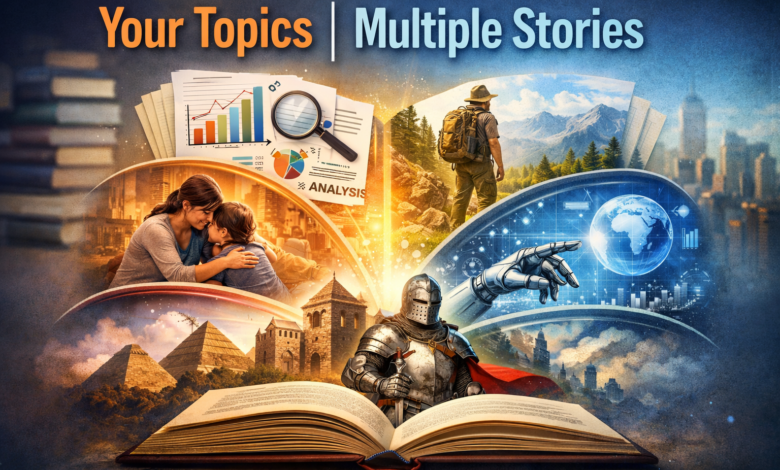
In today’s fast-moving digital world, readers no longer want to stick to just one type of content. They look for variety, depth, and meaning, all combined in a single experience. This is where your topics | multiple stories becomes highly relevant. It represents a modern approach to content creation and consumption, where different themes, ideas, and narratives coexist under one umbrella.
Whether you are a blogger, content creator, marketer, or an everyday reader, understanding how your topics | multiple stories works can help you gain more value from content. This approach encourages exploration, keeps audiences engaged, and allows ideas to connect naturally. In this article, we will explore this concept in detail, breaking it down into clear sections that are easy to understand and apply.
Understanding the Concept of Your Topics | Multiple Stories
What Does Your Topics | Multiple Stories Mean?
The phrase your topics | multiple stories refers to presenting various narratives, viewpoints, or subtopics within a broader theme. Instead of focusing on a single storyline, this approach allows multiple perspectives to exist together. Each story adds value while still connecting to the main subject.
This structure is especially effective in digital content, where audiences have different interests and learning preferences. Some readers prefer detailed explanations, while others enjoy personal stories or real-life examples. Multiple stories ensure that everyone finds something meaningful.
Another key advantage is flexibility. Writers can explore trends, case studies, opinions, and practical tips without being restricted to a single narrative style. This creates richer and more engaging content.
Why This Approach Matters Today
Modern audiences have shorter attention spans but higher expectations. They want content that feels complete and worth their time. By using your topics | multiple stories, creators can hold attention longer and provide more value in one piece of content.
This approach also aligns well with search engine optimization. Search engines favor content that covers a topic comprehensively. Multiple stories help address related keywords, user questions, and different angles naturally.
Finally, it builds trust. When readers see well-rounded content that considers multiple perspectives, they are more likely to view the author as an expert rather than someone pushing a single opinion.
The Importance of Multiple Stories in Content Strategy
Enhancing Reader Engagement
One of the biggest benefits of using multiple stories is improved engagement. When readers encounter varied narratives, they are more likely to keep scrolling and reading. Each story acts as a hook that pulls them further into the content.
Different stories also trigger emotional connections. A data-driven explanation appeals to analytical readers, while a personal anecdote resonates with emotional thinkers. Together, they create a balanced experience.
Over time, this engagement leads to better retention. Readers remember content that made them think, feel, and learn from different angles.
Building Authority and Credibility
Content that includes multiple stories often feels more credible. It shows that the writer has researched the topic thoroughly and understands its complexity. This is essential for establishing authority in competitive niches.
By covering diverse aspects of a topic, creators demonstrate expertise without sounding repetitive. Readers appreciate content that answers their questions before they even ask them.
In the long run, authority leads to loyalty. Audiences are more likely to return to platforms that consistently deliver well-rounded content using your topics | multiple stories.
How to Structure Content Using Your Topics | Multiple Stories
Creating a Clear Framework
While multiple stories are valuable, structure is essential. Without a clear framework, content can feel scattered. The best approach is to define a central theme and then organize stories around it logically.
Start with an introduction that sets expectations. Let readers know they will explore different angles of the same topic. This prepares them for a richer experience.
Then, divide content into sections using H2 and H3 headings. Each section should focus on a specific story or subtopic while still connecting back to the main idea.
Balancing Depth and Simplicity
A common mistake is overloading readers with too much information. While multiple stories add depth, simplicity should not be lost. Each paragraph should focus on one clear idea.
Use simple language and short sentences where possible. Avoid unnecessary jargon unless it is explained clearly. This keeps content accessible to a wider audience.
Remember, the goal of your topics | multiple stories is not complexity, but clarity through variety.
Benefits of Using Your Topics | Multiple Stories for SEO
Improved Keyword Coverage
From an SEO perspective, multiple stories allow natural keyword expansion. Instead of repeating the same phrase unnaturally, related terms and questions can be included seamlessly.
Search engines prefer content that answers multiple user intents. A single article with various stories can rank for several related queries, increasing visibility.
This approach also reduces the need for multiple short articles on similar topics. One comprehensive piece often performs better in search results.
Higher Dwell Time and Lower Bounce Rate
When readers find content engaging, they stay longer. Multiple stories encourage exploration, which increases dwell time. This sends positive signals to search engines.
A lower bounce rate indicates that users found what they were looking for. By addressing different questions and perspectives, your topics | multiple stories meets diverse user needs in one place.
Over time, these metrics contribute to better rankings and organic growth.
Real-World Applications of Multiple Stories
Blogging and Content Marketing
In blogging, multiple stories allow writers to stand out. Instead of writing repetitive posts, creators can explore different angles within one article. This saves time and improves quality.
Content marketers use this approach to guide readers through awareness, consideration, and decision stages in a single piece. Stories can educate, inspire, and persuade simultaneously.
This method also supports internal linking strategies, as related topics naturally connect within the same article.
Education and Knowledge Sharing
Educational platforms benefit greatly from multiple stories. Concepts can be explained through theory, examples, and real-life applications. This caters to different learning styles.
Students often understand topics better when they see them applied in various contexts. Multiple stories reinforce understanding and retention.
This approach is equally effective in tutorials, guides, and long-form educational content.
Common Mistakes to Avoid
Lack of Focus
One risk of using multiple stories is losing focus. If stories are not clearly connected to the main topic, readers may feel confused.
Always ask whether each story adds value to the core theme. If it does not, it is better to remove or revise it.
A strong introduction and conclusion help maintain focus throughout the content.
Overuse of Keywords
While SEO is important, keyword stuffing can harm readability. The keyword your topics | multiple stories should appear naturally, not forced into sentences.
Search engines prioritize user experience. Clear, helpful content will always outperform keyword-heavy but poorly written articles.
Balance is key to long-term success.
The Future of Content with Multiple Stories
Evolving Reader Expectations
As audiences become more informed, they expect deeper insights. Simple, surface-level content is no longer enough. Multiple stories meet this demand by offering comprehensive coverage.
Readers also value authenticity. Real experiences and diverse viewpoints make content feel more human and relatable.
This trend is likely to grow as content competition increases.
Adapting to New Platforms
Different platforms support different content formats, but the concept remains the same. Whether it is blogs, newsletters, or long-form social posts, your topics | multiple stories can be adapted easily.
The key is understanding the platform and audience. Once that is clear, stories can be tailored without losing depth.
This adaptability makes the approach future-proof.
FAQs
1. What is meant by your topics | multiple stories?
It refers to covering a single broad topic through several related stories or perspectives, offering depth and variety in one piece of content.
2. How many times should the keyword be used in an article?
Ideally, the keyword should appear 4 to 6 times naturally to maintain readability and SEO balance.
3. Is this approach suitable for beginners?
Yes, beginners can use this method by planning their structure carefully and focusing on clarity rather than complexity.
4. Does multiple stories content rank better on search engines?
Often yes, because it covers a topic comprehensively, improves dwell time, and addresses multiple user intents.
5. Can this method be used for short content?
While it works best for long-form content, even short pieces can include two or three mini-stories for added value.
6. How do I avoid confusing readers with multiple stories?
Use clear headings, logical flow, and strong transitions to guide readers smoothly through the content.
By understanding and applying your topics | multiple stories, content creators can produce articles that are engaging, authoritative, and SEO-friendly. This approach not only benefits search rankings but also creates a richer experience for readers, making content more impactful and memorable.